Friday, October 28, 2011

Gecko

World Widelife/Gecko.You can find over 2000 spieces of Gacko all around the Earth and it is widely believed that there are more species of gecko that ate yet to be discovered.There for a lot of Experts are serching for these species.

The Gacko is a little bit Small even the gecko is a small to medium species of lizard that is found in the more temperate and tropical regions of the world.

Geckos are more commonly found around the Equator and in the Southern Hemisphere although a few species of gecko are found north of the Equator in warmer regions. Geckos are found in a wide variety of colours and have various different markings on their bodies depending on the species of gecko.

Geckos are found in a wide variety of habitats in the warmer parts of the world including rocky deserts, mountains, jungles, rainforests, grasslands and even in urban areas where it is common to find geckos in houses. Geckos can range in size from just a few centimetre to more than 50 cm in length.

The largest species of gecko is the Delcourt's gecko (which is now believed to be extinct), native to New Zealand and it grows to nearly 60 cm in length. You can find it in South Americ.I

Gecko

Arabian Gazelle

Arabian Gazelle has a slender build with a proportionally long neck and long hind legs. It has a dark brown coat, white underparts and a black, short, and bushy tail. Both male and female have horns and their ears are short.

Arabian gazelles are excellent runners and can reach speeds of 80 km per hour. They have excellent vision, hearing, and a good sense of smell to help detect predators and to find food.

The Arabian gazelle prefers mountainous and hilly habitat consisting of light forests, fields, or desert plateaus.

Days are usually spent in the hills and at night or in the early morning they come down to forage. They prefer to eat grasses, herbs, and shrubs but can eat other varieties of food, depending on what is available in their habitat.

Groups consist of three to eight gazelles, and males are territorial preferring one or more females in the group and their young. Mating occurs mainly in the early winter, but can take place year-round if food is not scarce.

The female gives birth to only one calf after a gestation period of 180 days. Males may leave after about six months, but females may remain with their mother for life.
Arabian Gazelle

Tuesday, October 25, 2011

Drawin's frog

Drawin's frog Green
Drawin's frog Child
Drawin's frog Green dead leaf
Drawin's frog
Drawin's frog in leaf Shape
Drawin's frog
This is quite small species and mostly you can find them in Africa and indonasia.This frog is have a very unique power,the female frog saves her child in her mouth until it completly become young,After the the female frog bring him/her out.Probably you can find this frog in Green colour,In the jungles or some where else when these frogs feel danger they changed their colour until the danger over.Here above I am giving you some photos.I hope that you like,feel free to share thoughts with us.

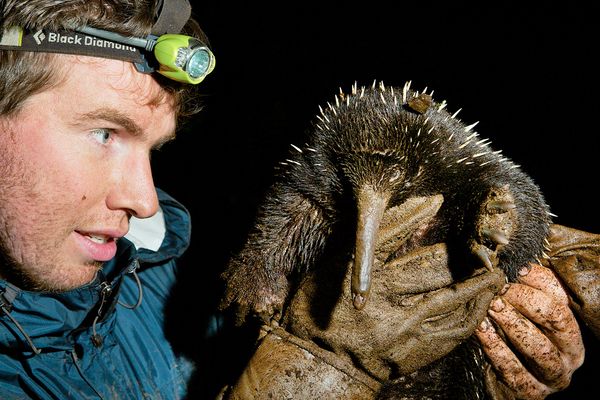
Long-beaked Echidna

Sunday, October 23, 2011

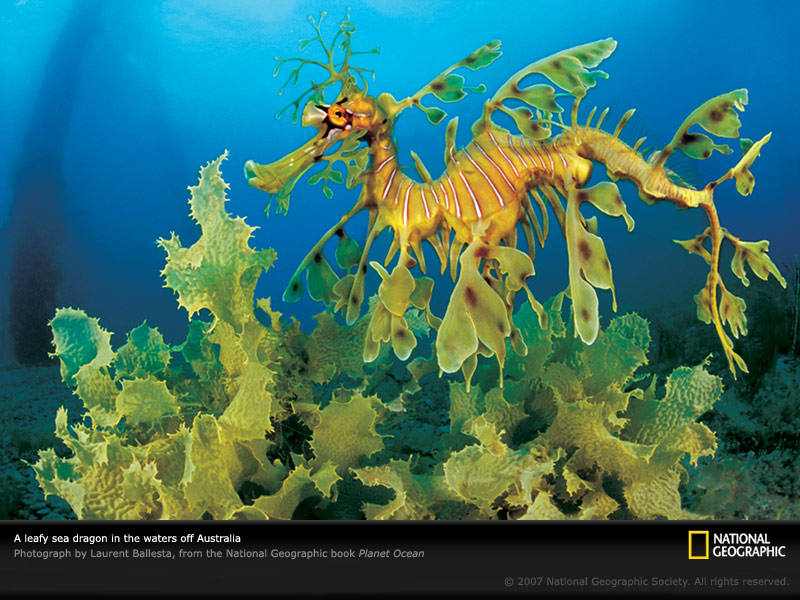
Leafy Sea Dragon

True Wild Life | Leafy Sea Dragon | Sea Dragons are arguably the most spectacular and mysterious of all ocean fish. Though close relatives of sea horses, sea dragons have larger bodies and leaf-like appendages which enable them to hide among floating seaweed or kelp beds. Sea dragons feed on larval fishes and amphipods, such as and small shrimp-like crustaceans called mysids ("sea lice"), sucking up their prey in their small mouths. Many of these amphipods feed on the red algae that thrives in the shade of the kelp forests where the sea dragons live.Leafy Sea Dragon

As with their smaller common seahorse (and pipefish) cousins, the male sea dragon carries and incubates the eggs until they hatch. During mating the female deposits up to 250 eggs onto the "brood patch" on the underside of the male's tail. After about eight weeks, the brood hatches, but in nature only about 5 per cent of sea dragons survive to maturity (two years). A fully grown Leafy Sea Dragon grows to about 18 inches (45 cm).Leafy Sea Dragon

Leafy Sea Dragons are very interesting to watch-- the leafy appendages are not used for movement. The body of a sea dragon scarcely appears to move at all. Steering and turning is through movement of tiny, translucent fins along the sides of the head (pectoral fins, visible above) and propulsion derives from the dorsal fins (along the spine). Their movement is as though an invisible hand were helping, causing them to glide and tumble in peculiar but graceful patterns in slow-motion. This movement appears to mimic the swaying movements of the seaweed and kelp. Only close observation reveals movement of an eye or tiny fins.Leafy Sea Dragon

Leafy Sea Dragons are very interesting to watch-- the leafy appendages are not used for movement. The body of a sea dragon scarcely appears to move at all. Steering and turning is through movement of tiny, translucent fins along the sides of the head (pectoral fins, visible above) and propulsion derives from the dorsal fins (along the spine). Their movement is as though an invisible hand were helping, causing them to glide and tumble in peculiar but graceful patterns in slow-motion. This movement appears to mimic the swaying movements of the seaweed and kelp. Only close observation reveals movement of an eye or tiny fins.Leafy Sea Dragon

Blanket Octopus

True Wild Life | Blanket Octopus | This is one weird open ocean octopus! It looks like the Batman symbol flying through the ocean. It's common name, Blanket octopus, comes from their large web which they use to glide through the ocean. Blanket octopuses are rarely observed, but when people see them they notice.

One, complete with eggs, washed up in Bermuda while I was off island on vacation. It made the local news and was the talk of the island. Another was recently (Sept 2009) spotted in St. Thomas, USVI.

The blanket octopus (Tremoctopus violaceus) is a rarely encountered pelagic species that spends its entire life cycle in the open ocean (Norman et al. 2002). Until the first observation of a living male off the northern Great Barrier Reef, Australia (Norman et al. 2002), males were known only from dead individuals picked up in trawls and plankton nets.


Tremoctopus violaceus lives in the open ocean often in deep water (120-750 m) in the Mediterranean and the North and South Atlantic Ocean. The offspring are likely planktonic given the small size of the eggs. These octopuses may reproduce more than once but no one really knows much about their life history.


Saturday, October 22, 2011

Olm

True Wild Life | Olm | The olm (also known as the proteus or the cave salamander) is a blind amphibian exclusively found in the underwater caves of southern European lakes and rivers. The olm is also known as the human fish, which refers to the colour of it's skin.

The olm is the only species in it's genus and is found inhabiting the waters that flow underground through an extensive limestone region including waters of the Isonzo river basin near Trieste in Italy, through to southern Slovenia, south-western Croatia, and Herzegovina. The olm is most well known for living it's entire life in the darkness of the underwater caves, which has led this species to adapt quite strangely to life without light. The most notable feature of the olm is the fact that it is blind as it's eyes are not properly developed and instead it must rely on incredible hearing and smell to understand it's surroundings.

In a similar way to the axolotl, the olm does not undergo the drastic transformation from young to adult in the same way that frogs and toads do. The olm is also entirely aquatic, hunting, mating, eating and sleeping in the darkness of the underwater caves.

As with other amphibious animals, the olm is a carnivore meaning that it gets all the nutrition it needs from eating other animals. Small invertebrates are the main source of food for the olm including worms, aquatic insects, larvae and snails. Due to the fact that the olm lives out it's life in the safety of a dark, underwater cave, it has fewer predators than it would have living both in the water and on land. Fish and other amphibians are the primary predators of the olm along with the very occasional rodent or bird.

The olm does not reach sexual maturity until it is between 10 and 15 years old, and after mating, female olms lay from 5 to 30 eggs in between rocks in the water where she can protect them from hungry predators. Olm tadpoles are less than an inch long when they hatch and take on the appearance of the adult olm by the time they are a few months old
Today, due to rising levels of water pollution, olm populations are declining meaning that the olm is now considered to be vulnerable to extinction in their native environment.
We Should act upon this its a very Serious matter Share your good thoughts with us.